How to Write a Digital Will: A Step-by-Step Guide for 2026
A digital will turns your scattered online life into a clear set of instructions your loved ones can actually follow: the cornerstone of digital succession, also known as digital legacy planning. Here is how to write one that holds up legally, technically, and emotionally.
A digital will is not a replacement for a traditional will. It is its missing companion. A traditional will tells your executor what to do with your house, your savings, and your possessions. A digital will tells them what to do with your accounts, your data, your subscriptions, and the dozens of digital signals you leave behind. Done well, the two documents reference each other and form a single coherent estate plan. Done badly, they contradict each other and create months of legal confusion.
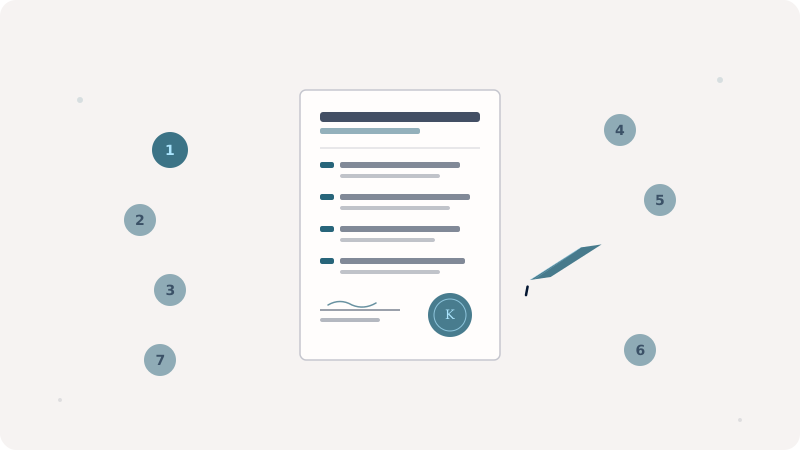
The good news: writing a digital will does not require a lawyer for the first draft. It requires a quiet afternoon, a list of accounts, and the willingness to make decisions you have probably been postponing. Below is a step-by-step process you can run end-to-end in a few hours and refine over time.
Step 1: Choose Your Digital Executor
Pick the person who will carry out your digital instructions. This may or may not be the same person as your traditional executor. The right candidate combines two qualities: enough technical comfort to follow instructions about email recovery and crypto wallets, and enough emotional steadiness to make decisions calmly. Name a backup in case your first choice is unavailable, ill, or has predeceased you.
Step 2: Build the Asset Inventory
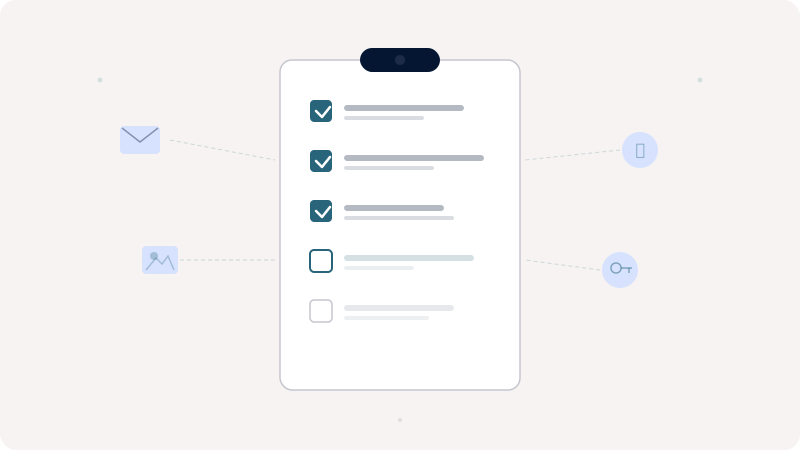
Spend a weekend listing every account, subscription, device, and digital asset you can think of. Group them: communication (email, messaging, social), finance (banks, brokerages, crypto, payment apps), storage (cloud drives, photo backups, password manager), creative (domains, websites, repositories, design tools), and miscellaneous (loyalty programs, smart home, gaming). The inventory is the spine of the document: everything else depends on it being accurate.
Step 3: Decide Outcomes for Each Asset
For each entry, choose one of four outcomes: transfer (passes to a named heir), preserve (kept as archive without active use), memorialize (left as a tribute under platform-specific rules), or delete (closed and erased). Write a brief 'why' next to each decision; future-you and your executor will both thank you. If an account hosts something jointly owned, like a shared family album, note the co-owner so they are not caught off guard.
Step 4: Configure Platform-Native Tools
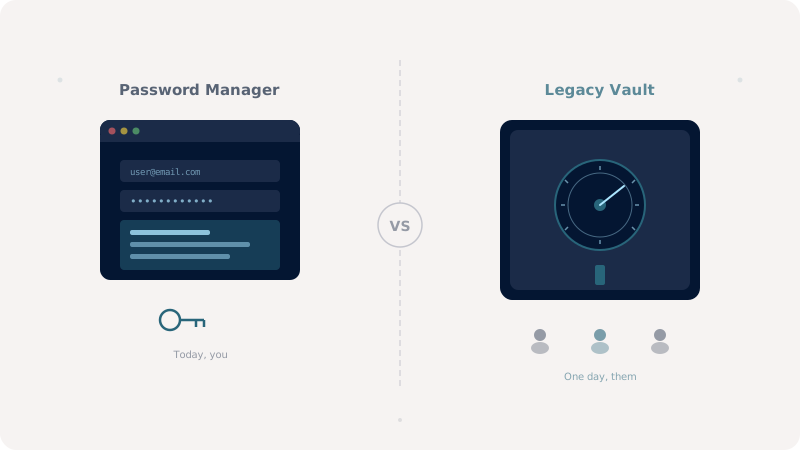
Where platforms offer legacy contacts (Apple, Google, Meta, Microsoft, X), configure them today. These tools legally bind the platform in ways a private document cannot. Do this even if you also have a vault: the two layers work together, with platform tools handling per-account access and the vault providing the cross-platform instructions and credentials.
Step 5: Store the Document Securely
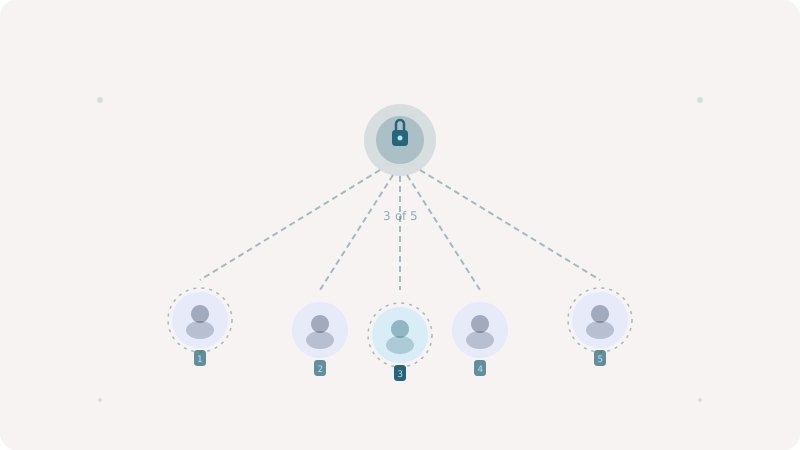
A digital will is itself a sensitive document. It should not live in plaintext on a laptop, in a Google Doc, or in a paper envelope in a shoebox. A zero-knowledge digital legacy vault is the natural home: encrypted in transit and at rest, accessible to your digital executor through a recovery quorum, and updatable as life changes. Cross-reference the location of the vault in your traditional will so your executor knows where to look.
Step 6: Tell the People Who Need to Know
A will that nobody can find is useless. Tell your digital executor that the document exists, where it is stored, and how to begin recovery. You do not need to share its contents; you only need to share the entry point. Repeat the conversation periodically (once a year is a reasonable cadence) so the information stays fresh in their mind.
Step 7: Have Your Lawyer Review It
Once the draft is solid, bring it to the lawyer who handled your traditional will. Their job is to align the two documents, flag jurisdictional issues, and ensure that anything with monetary value is reflected in the official estate documents. The digital will itself usually does not need to be a notarized instrument; it just needs to be consistent with the one that is.