Why We Build in the Open
Trust shouldn't be a marketing claim. It should be verifiable. Here's why Keeplas is fully open-source and how transparency is the foundation of real security for digital succession, also known as digital legacy planning.
When a company asks you to trust them with your most sensitive data, you should be able to verify that trust. Not through a blog post or a compliance badge, but through the code itself. The history of consumer security is littered with products that marketed end-to-end privacy while quietly exfiltrating keys, logging metadata, or holding back-door master credentials. The only durable defense against that pattern is letting anyone with the time and skill read what the software actually does.
Open source is sometimes framed as a philosophical position. For a digital legacy platform, it is a structural one. Your vault must remain readable to your heirs for decades, potentially long after any single company has gone out of business. The only way that promise survives the founder, the funding round, and the eventual acquisition is if the source code, the file formats, and the cryptographic protocols all live in the open.
Security Through Transparency
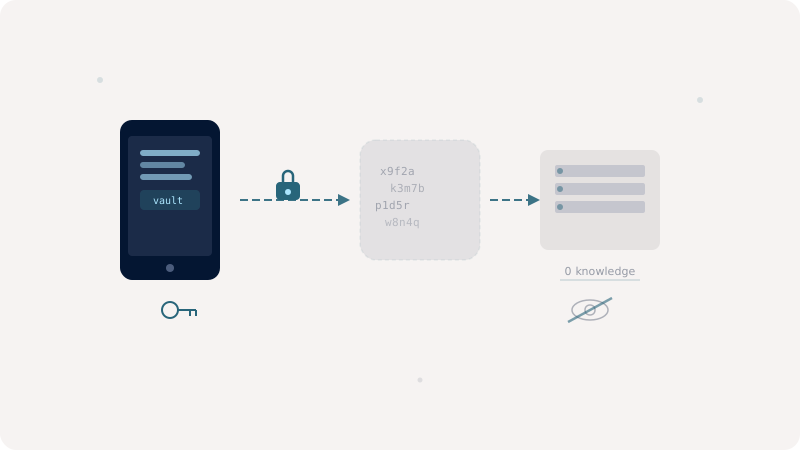
Closed-source security products ask you to take their word for it. Open-source flips that dynamic. Every encryption routine, every key derivation function, every data flow in Keeplas is visible, auditable, and forkable. A motivated reviewer can confirm, line by line, that the recovery phrase never leaves the device, that the master key is wrapped before upload, and that no telemetry pipeline silently leaks what you stored.
This isn't a vulnerability. It's a strength. The most trusted cryptographic libraries in the world (OpenSSL, libsodium, Signal Protocol, age) are all open source. Security that depends on secrecy of implementation, an idea cryptographers call 'security through obscurity,' is security that's already compromised. Real cryptography survives publication; bad cryptography breaks the moment it leaves the marketing department.
Community as a Security Layer
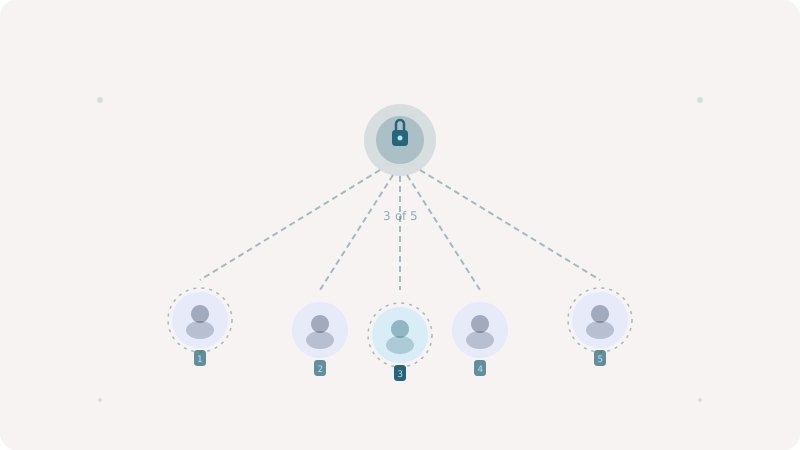
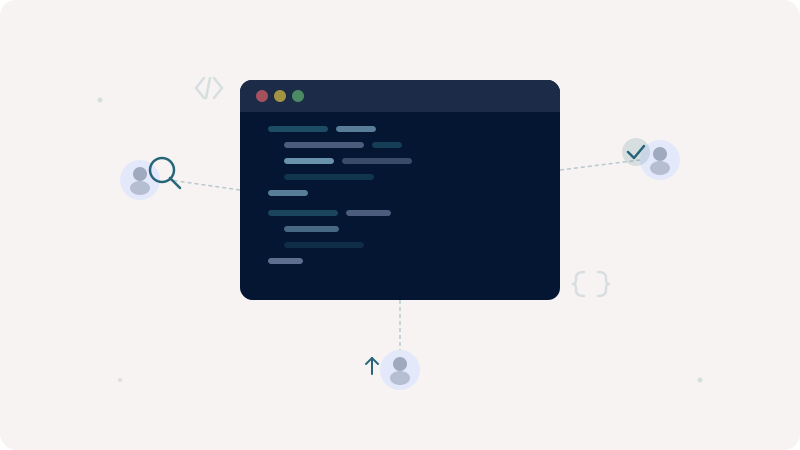
An open-source codebase doesn't just allow audits. It invites them. Independent researchers, security professionals, and contributors constantly review and improve the code. This distributed vigilance creates a security surface that no internal team could match alone. Bugs are reported through coordinated disclosure, fixes land in the public record, and the entire community of users benefits from each round of review.
The Keeplas codebase is published with reproducible builds, meaning anyone can recompile the application from source and verify that the artifact distributed to end users is exactly what the public repository describes. This eliminates an entire class of supply-chain risks that have plagued binary-only software.
Your Data, Your Rules
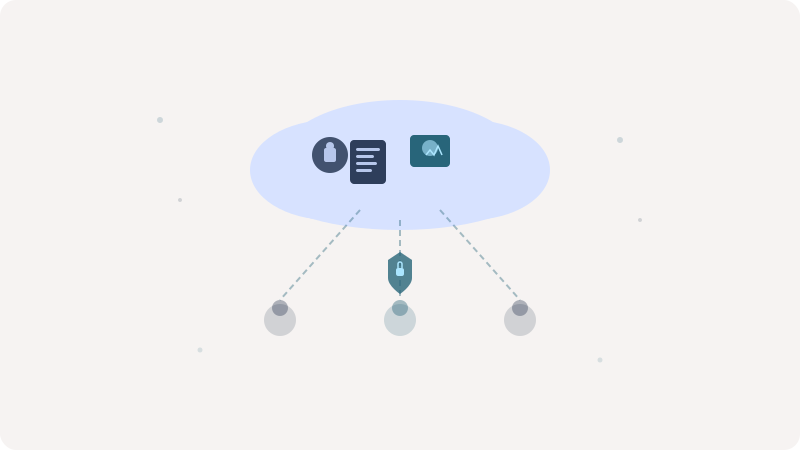
Being open source also means you're never locked in. If Keeplas disappears tomorrow, the code lives on. You can self-host on your own infrastructure, fork the project to suit specialized needs, or migrate your encrypted vault to a community-maintained instance. Your succession data is never held hostage by a business model, a pricing change, or a sudden policy update.
An Honest Commitment, Not a Slogan
Marketing an app as 'open' while keeping the security-critical components closed is a common pattern worth calling out. Keeplas publishes the client, the cryptographic primitives, the protocol specifications, and the server reference implementation. The promise is simple: if you cannot verify it, we should not claim it.