Why Digital Succession Matters More Than Ever
We store our most important memories, documents, and credentials in the cloud, but what happens to them when we're gone? A look at why digital succession, also known as digital legacy planning, is the overlooked pillar of modern estate planning.
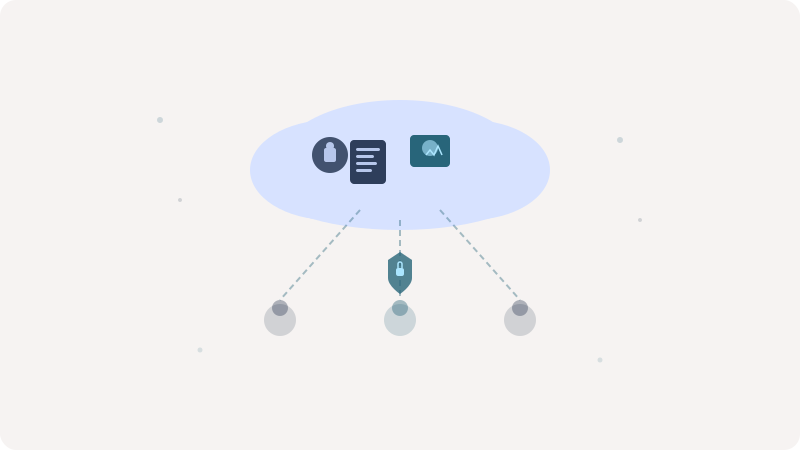
We live in an era where the average person manages over 100 online accounts. From banking credentials and insurance policies to family photo libraries and cryptocurrency wallets, our digital footprint has become inseparable from our real-world succession. Each new device, each new subscription, each new platform adds another thread to a web of identity that nobody, not even ourselves, can fully map at any given moment.
Yet most estate planning still focuses exclusively on physical assets: houses, cars, savings accounts, and tangible heirlooms. The result is a structural blind spot. Families are left scrambling to recover passwords, losing access to irreplaceable memories, or watching digital assets vanish entirely behind locked accounts and silent recovery flows. Lawyers, notaries, and even financial advisors rarely have the technical literacy to guide clients through this terrain.
The Hidden Cost of Inaction
Studies estimate that billions of dollars in cryptocurrency alone have been permanently lost due to inaccessible wallets. The Chainalysis dormant supply reports consistently surface millions of bitcoins that haven't moved in years, many of them almost certainly belonging to people who passed away without sharing their seed phrase. The same dynamic plays out across stock brokerages, online banks, freelance platforms, and ad revenue accounts that quietly accumulate value over decades.
But the cost isn't only financial. It's emotional. Photo libraries, personal writings, voice messages, and private journals carry immeasurable sentimental value. When a parent dies, their iCloud library can hold the only existing copies of decades of family memories. When a sibling passes, their WhatsApp conversations may be the last record of their voice. Losing these is not the same as losing money: there is no way to recover what disappears.
Why Traditional Estate Tools Fall Short
A traditional will is a physical document that names heirs and assigns property. It works because property is registered, taxable, and recognized by courts. Digital accounts, by contrast, are governed by terms of service that almost universally forbid sharing credentials, transferring ownership, or granting third-party access. Even when a will explicitly mentions a Gmail account or a Notion workspace, the platform's policy can override the testator's intent.
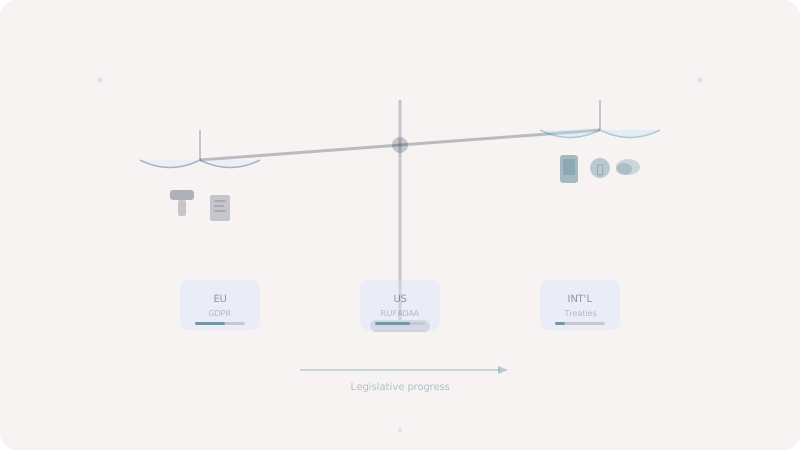
Some jurisdictions are catching up (France's loi pour une République numérique, the U.S. Revised Uniform Fiduciary Access to Digital Assets Act, and similar reforms across the EU), but enforcement remains slow and inconsistent. Relying on the law alone means relying on a system that wasn't designed for the shape of modern digital life.
A New Approach to Continuity
Digital legacy isn't about handing over a list of passwords. It's about building a secure, structured system that ensures the right people have access to the right information at the right time, without compromising your privacy while you're alive. That means separating what should be inherited from what should die with you, encoding conditions for release, and designing for the reality that the people who help recover access may not be technical experts.
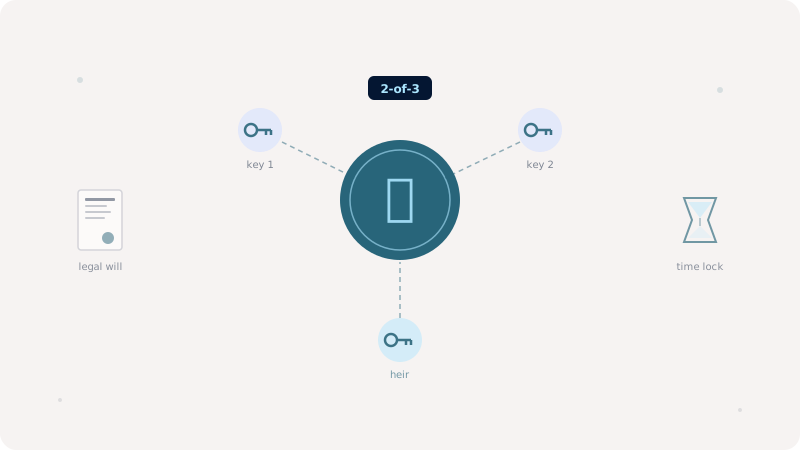
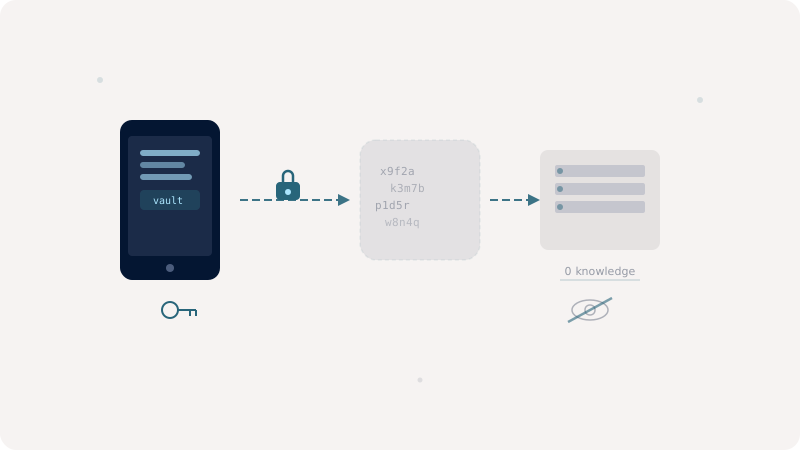
This is exactly the problem Keeplas was built to solve. Through zero-knowledge encryption and social recovery mechanisms, your vault remains private to you, yet accessible to your trusted circle when it matters most. You can store credentials, documents, recovery seeds, instructions, and farewell messages, then define exactly who can unlock what, and under which conditions.
Starting the Conversation
Building a digital succession plan is also a deeply human exercise. It forces conversations many families avoid: who do you trust with your most sensitive information, what do you want preserved, what do you want erased, and who should have the final say. Starting early, long before any health concerns arise, gives you the time to make these choices calmly, revise them as relationships evolve, and explain them to the people who will eventually act on them.