End-to-End Encryption vs Zero-Knowledge: What's the Difference?
These two terms are often used interchangeably, but they describe fundamentally different security models. Understanding the distinction could change how you evaluate every app you trust with your data.
If you've ever looked into privacy-focused tools, you've probably encountered both 'end-to-end encrypted' and 'zero-knowledge' as selling points. Many people, and even some companies, use these terms as if they mean the same thing. They don't, and the difference matters. Conflating them is one of the most common ways consumers end up trusting a service that turns out to have far more access than its marketing implied.
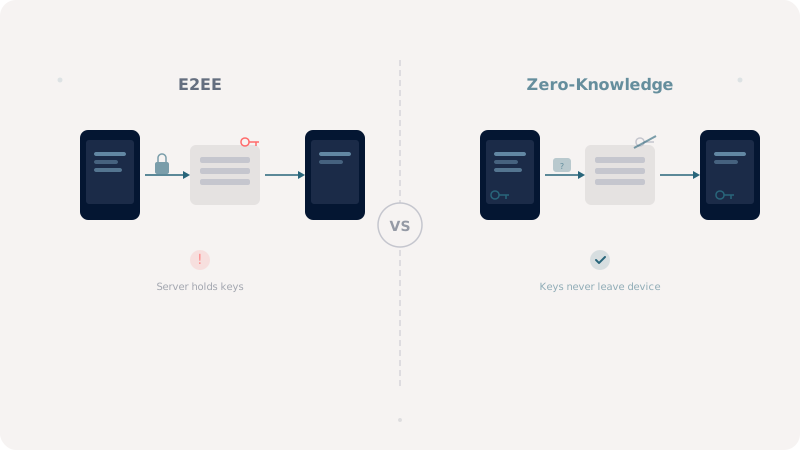
The shorthand version: end-to-end encryption is about who can read data while it is moving; zero-knowledge is about who can read it at rest, ever, in any state. A product can be E2EE without being zero-knowledge. A product cannot truly be zero-knowledge without also being E2EE, but the inverse is what trips most people up.
End-to-End Encryption (E2EE)
E2EE ensures that data is encrypted on the sender's device and only decrypted on the recipient's device. No intermediary (not the server, not the ISP, not the app provider) can read the content in transit. Messaging apps like Signal are the textbook example: keys are negotiated directly between participants, the server relays opaque ciphertext, and forward secrecy ensures that even compromise of a long-term key cannot retroactively decrypt past sessions.
However, E2EE alone doesn't guarantee that the service provider can't access your data at rest. If the provider manages the encryption keys, they can still decrypt stored data on their servers. Many 'E2EE' cloud backups, including those of some mainstream messaging apps, fall into this trap: messages are end-to-end encrypted between phones but uploaded to a server-controlled archive in a form the provider can read.
Zero-Knowledge Architecture
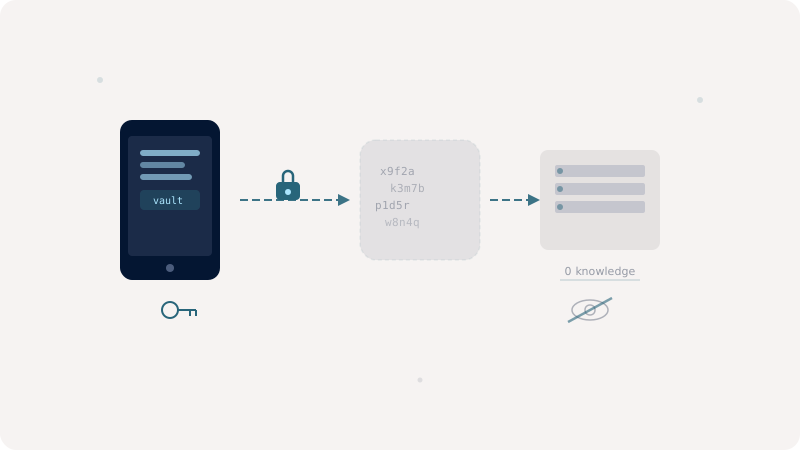
Zero-knowledge goes a step further. In a zero-knowledge system, the provider never has access to your plaintext data or the keys needed to decrypt it: not in transit, not at rest, not ever. The encryption keys are derived from a secret only you know, and all cryptographic operations happen client-side. The server is architecturally incapable of reading your data, even if compelled to.
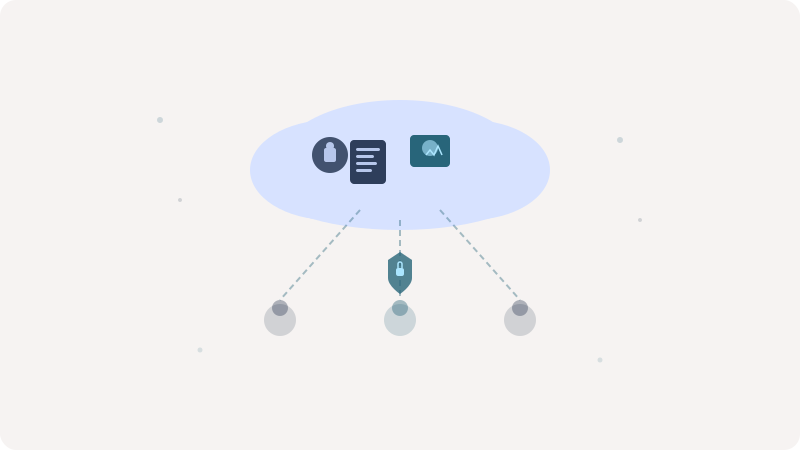
Zero-knowledge applies to more than file contents. A robust implementation also hides metadata to the maximum extent possible: file names, folder structures, sharing relationships, and tags should be encrypted, not just the blobs they describe. Otherwise, the metadata becomes a side channel that reveals almost as much as the data itself.
Why the Distinction Matters
Consider a cloud storage service that advertises E2EE. Your files are encrypted during upload and download. But if the service generates and stores the encryption key on your behalf, a breach, or a legal order, could still expose your data. A zero-knowledge service eliminates this possibility by ensuring the key exists only in your control. The legal team of a zero-knowledge provider receiving a subpoena can truthfully respond that they cannot comply, because the architecture leaves them nothing to hand over.
What to Look For
When evaluating tools for sensitive data, ask: Who holds the keys? If the answer is anyone other than you, it's not truly zero-knowledge. Ask what happens during 'forgot password' flows: if the provider can restore your data via an email link, the keys must live somewhere they control. Ask whether the metadata is encrypted, not just the content. Ask whether the client is open source so the answers can be verified.
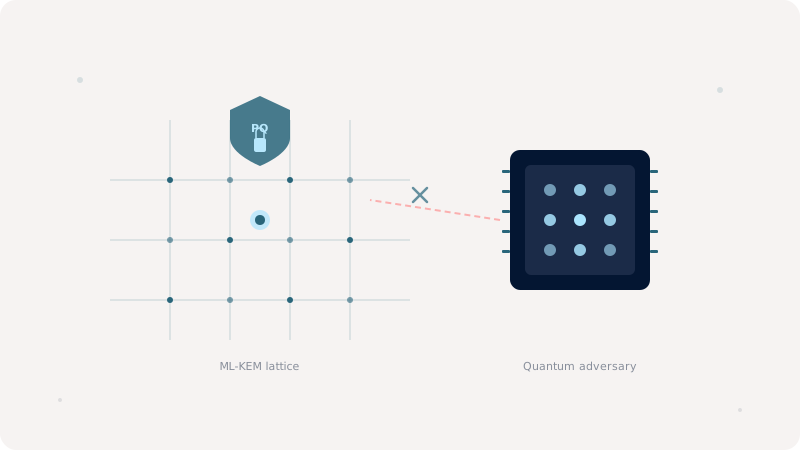
At Keeplas, your 24-word recovery phrase never leaves your device. We derive encryption keys locally using Argon2id, wrap shared keys with post-quantum ML-KEM-768, and our servers only ever store ciphertext they cannot decrypt. That's the standard your data deserves, and it is verifiable in the public source code.