Protecting Your Crypto Inheritance: From Seed Phrases to Beneficiaries
Cryptocurrency turns inheritance into a cryptographic puzzle. Here is how to design a crypto succession plan (a key part of digital succession, also known as digital legacy planning) that actually works without compromising your security today.
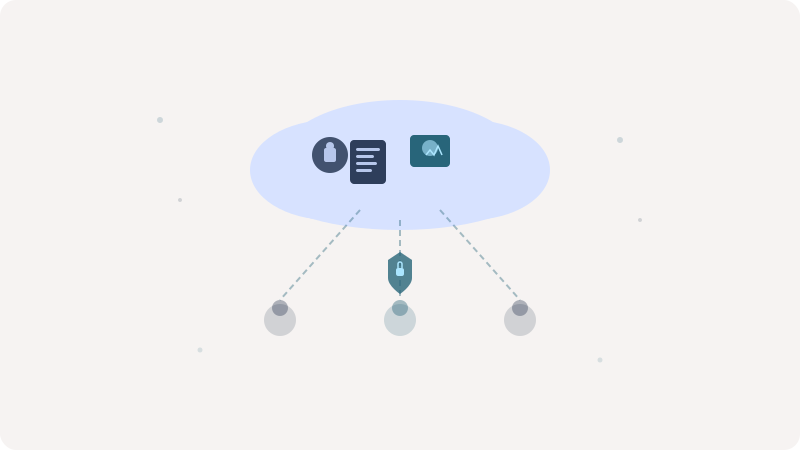
Cryptocurrency was designed so that ownership requires no intermediary. That property, the same one that makes self-custody powerful, makes inheritance brutal. There is no customer service line to call, no court that can compel a blockchain to recognize an heir, no institution that holds your assets in escrow. If your private key dies with you, the assets die with it. Estimates suggest that millions of bitcoins, worth tens of billions of dollars, have already been lost this way.
Designing a crypto succession plan is therefore a problem of cryptography as much as of law. The plan has to balance three tensions: you must remain in sole control while you are alive, your heirs must be able to take control when you are not, and no single point of failure (a misplaced piece of paper, an unreachable contact, a forgotten password) can undo the whole structure.
Why a Will Alone Is Not Enough
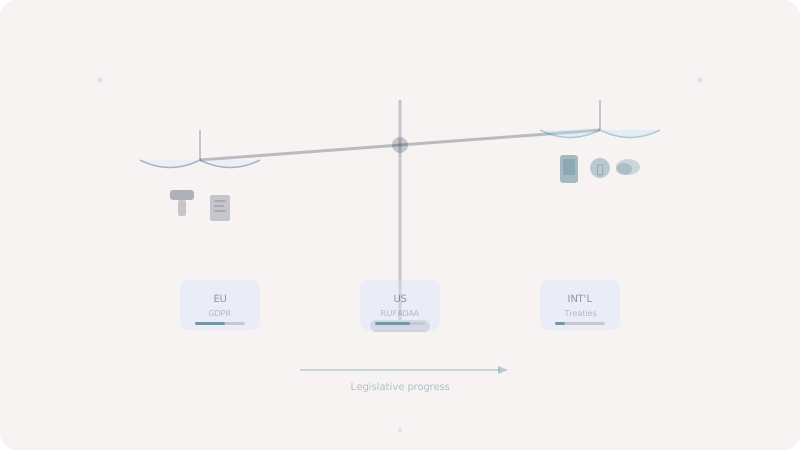
A will can legally name your son as the inheritor of your bitcoin. It cannot give him the private key. Some heirs have spent years in probate court holding a court order they cannot execute, because the only person who knew the seed phrase is gone. The law can recognize ownership, but blockchains only honor cryptography. Any serious crypto inheritance plan starts from this fact.
Pattern 1: Multisignature Wallets
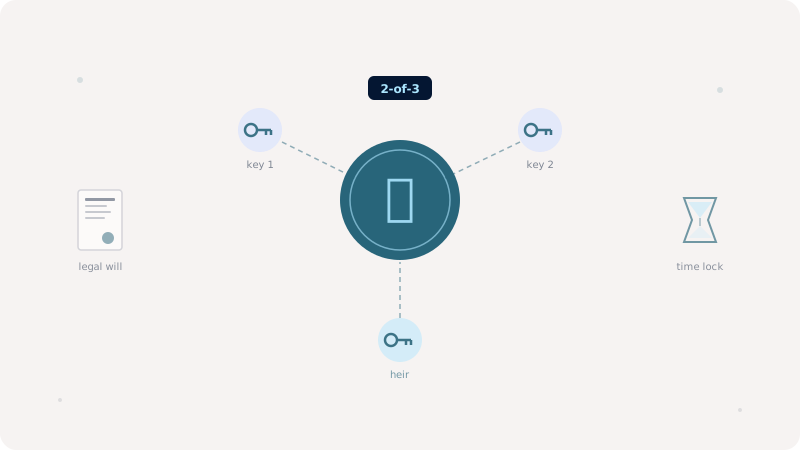
A multisig wallet requires multiple private keys (say, two out of three) to authorize any transaction. You can hold two, store the third with a trusted family member or a specialized service, and design the policy so that your heirs can spend the assets only after a delay or with a death certificate. Multisig is well supported on Bitcoin and many EVM chains. The trade-off is operational complexity: every transaction requires coordination, and the setup requires technical familiarity that some users lack.
Pattern 2: Shamir-Backed Seed Phrases
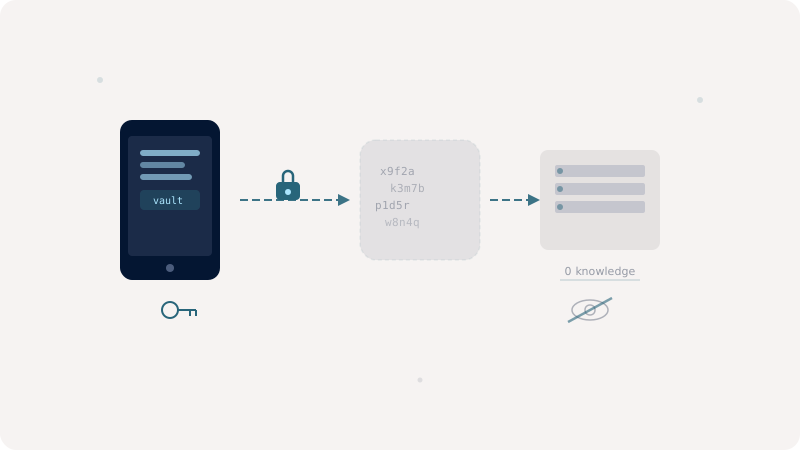
Instead of giving anyone a full seed phrase, split it using Shamir Secret Sharing. Distribute shares to several trusted contacts, define a threshold (3-of-5 is a common choice), and store the shares either physically (on metal plates resistant to fire and water) or inside a zero-knowledge vault that handles the cryptography for you. Your heirs combine enough shares to reconstruct the seed and recover the wallet. Done correctly, no individual share reveals anything about the underlying secret.
Pattern 3: Time-Locked Recovery
Smart contract platforms allow you to escrow assets with a time lock: if you do not 'check in' periodically, the assets become spendable by a designated beneficiary. The pattern eliminates third-party custody risk but introduces a new one: you must remember to check in, or risk triggering an unwanted inheritance event. Time-locked recovery works best in combination with social recovery, so a single missed check-in does not start an irreversible chain of events.
Avoiding Common Mistakes
Three patterns ruin most crypto inheritance plans. The first is single-source storage: a seed phrase written on a single piece of paper in a single drawer is one fire away from total loss. The second is over-disclosure: telling too many people creates a coordination problem and a security risk. The third is staleness: a plan written five years ago that has not been reviewed since rarely matches the wallets, exchanges, and tools you actually use today.
Bringing It All Together
Keeplas was designed with this exact pattern in mind: a digital legacy vault built for crypto succession. You can store seed phrases, multisig coordination details, and step-by-step instructions for your heirs inside a zero-knowledge vault. Social recovery handles the human layer; post-quantum cryptography handles the longevity layer; clear instructions in plain language handle the cognitive layer. Your crypto inheritance becomes something your family can actually execute, not a math problem they have to solve under stress.